

Thoughts, awards, where2buy, right2reply
The chipset
The first product launch from the new AMD is a chipset that marries an evolved IGP with a southbridge that's significantly better than its predecessors. AMD's needed it, too, as the real volume space is the sub-£500 PC with integrated graphics - a market that Intel currently owns.The RS690G northbridge, then, includes a Shader Model 2.0 IGP that's useful as a casual gaming platform with decent compatibility. Any user interested in running popular games engines at 1024x768 and above will need to look towards a PCIe-based card, and the 690G is equipped with a x16 slot for that purpose.
The chipset's strengths lie with its display options. Multi-display support that includes integrated, HDCP-certified HDMI and DVI as standard - the pre-requisite for Blu-ray and HD-DVD playback on your PC - as well as 4-monitor support if used with a discrete Radeon graphics card.
The display engine is equipped with Avivo and thus provides hardware-accelerated H.264 acceleration and a host of other benefits. There's enough grunt for the chipset to pass Microsoft Vista Premium certification and expect to system integrators liberally splash the logo on 690-equipped SKUs.
The southbridge, the SB600, is also a competent performer and pairs up well with the RS690G to provide a low-cost, feature-rich chipset.
We like the AMD 690G. The chipset has no obvious weaknesses, other than being very late to market, and the introduction of native HDMI - including HD audio transport - opens up the way for AMD to fully exploit the HTPC market. Retail models will be priced at around £50 and the combination of AMD 690G chipset and entry-level Athlon 64 X2 processors makes a compelling case for a relatively low-cost PC which is strong in most areas.
We'll now see if NVIDIA, who hit a home run with its nForce 430/6150 released well over a year ago, can re-extend its leadership with a new IGP iteration that's planned for CeBIT. It promises greater graphical grunt and a 2D feature-set to match. Interesting times in the integrated market right now.
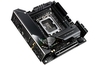
EQS AB1S-RS690MKM
EQS was the first manufacturer to send us its AMD 690G motherboard and it adheres to the reference specification in all departments other than the provision of a DVI port.2D performance is largely dictated by the AM2 processor, even with IGPs present, so there was no surprise in seeing it match the benchmarks laid down by an ASUS nForce 430/6150 motherboard.
3D performance was, on balance, better than NVIDIA's, but we stress again, users who look to spend a significant proportion of their time gaming will need to invest in a discrete graphics card.
The BIOS was also reasonable and the asking price of £49.25, including VAT, will make it one of the more competitive solutions around. Adding more good was the excellent 3-year warranty that EQS offers as standard on all its motherboards.
We suppose the only downside is the lack of current availability, with retail models expected to hit the channel in a month's time.
In summary, a decent board that's based on a decent chipset. We'll have to evaluate just how well other manufacturers do with their efforts but the EQS starts off AMD 690G exposure on a sure footing.
We'll be taking a closer look at 2D IGP performance and comparing it against the Intel duo of 945G and G965 in a follow-up article. What we can say right now is that 690G is a decent start for the all-new AMD.
HEXUS Awards
Integrated HDMI and a whole host of display-related options earns the EQS AB1S-RS690MKM a HEXUS media innovation gong.
EQS AB1S-RS690MKM