

Introduction
Overclocking with the new chipset
Since the introduction of the AMD Athlon 64 processor the overclocking community has, as ever, been keen to see just how far these fast processors will go. Progress has been slow and frustrating as both the VIA K8T800 and the nForce3 150 chipsets do not lock the PCI bus. This means that increasing the effective front side bus frequency affects not only the CPU and main memory, but also any peripherals connected to the PCI bus, since it's derived from that CPU driven frequency, itself derived from the HTT clock. As most onboard RAID controllers are on the PCI bus and nearly all SATA hard drive connections are via the RAID controller, increasing the front side bus speed can soon cause catastrophic hard drive failures. It seems that most AMD Athlon 64 owners are only able to increase the stock 200 MHz Front side bus a mere 10 to 20 MHz before problems start to occur.
With the launch of any new processor and chipset, features and stability are often slow to appear. NVIDIA are about to launch their second generation Athlon 64 chipset, nForce3 250. We have seen several early reports including a feature here at HEXUS. So far none of these articles have considered the chipsets overclocking features and performance. The most common question being asked is whether motherboards based on the nForce3 250 chipset will benefit from the ability to lock the AGP and PCI busses at 66.66MHz and 33.33MHz respectively.
As we have managed to procure a development motherboard from Gigabyte which uses the nForce3 250 chipset, we decided to try and answer some of your overclocking questions in this short article.
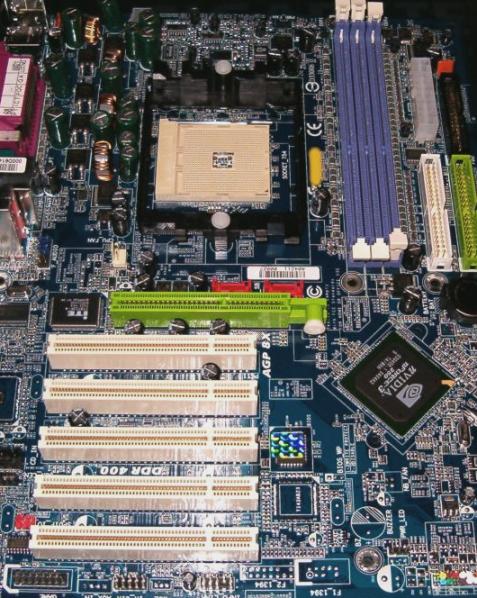
The board, model GA-K8NS, is the board Ryszard used in his initial nForce3 250 article. It's the same board that will appear in retail soon, save for a pre-production BIOS that will be stabilised before launch. It's at the value end of the market, but it still serves as a decent basis for our testing.