Published: Tuesday 4th November, 2008 | Author: Tim Foyle
Companies: Corsair (All Corsair content)
Keep a component cool, pump more voltage through it and crank up the MHz. This classic formula for overclocking has been with us since man first discovered chips could run faster than manufacturers said they would.
And in keeping with enthusiasts' urges to push the envelope ever further, Corsair's been working on a new cooling system for RAM. It's been keeping it under wraps, until now...
Allow us to reveal to you the latest in Corsair's plans for memory domination...
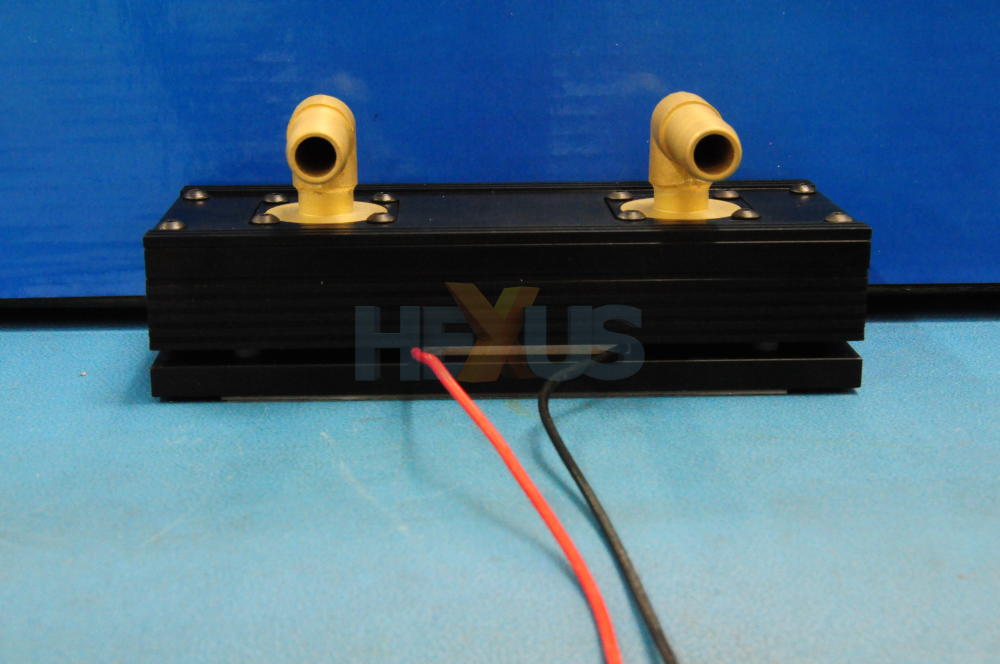
Yes, that's a bloody big water block. And yes, those wires are hooked up to a TEC. So, where once the only way to get your RAM below room temp was to put the PC outside, there's now this.
The sub-ambient temperatures of the Pelt/waterblock combination should allow extra voltage to be pushed through appropriately selected RAM modules without killing them, potentially yielding higher clock rates and lower latencies.
Pelt cooling is not for the faint of heart, though; sub-ambient temps will lead to condensation, which if dealt with improperly, can be a lot more harmful to components than overvolting.
We've been speaking to overclockers in the know and managed to get you lovely people these spy shots. We're not yet sure what Corsair's going to call this crazy RAM cooler. We do know that it's currently being tested. If it hits the shelves it's likely to be an exclusive accompanyment to the module-maker's enthusiast Dominator range of products.

Data recovery laptop
Data Clinic offer solutions for data recovery on your laptop. Click here for more!
Copyright © 1998 - 2010, HEXUS.net. All rights reserved. Terms, conditions and privacy information.
HEXUS® is a registered trademark of HEXUS Limited.
HEXUS.community :: your right2reply
All so are there going to be extra supports for the ram block because 80% of rigs these will be going into will be on there side and thats going to put some pressure on them ram sots.
(if im correct in thinking)
I doubt there would be much need for support, ram sticks are held in pretty well and have more support than most add in cards due to the latches on motherboards.Quote
had to use up all the R&D budget or they get less next year :laugh:
:laugh: Ain't that the truth. :)
Next year, I would like RAM with flashing lights on please :DQuote
I doubt there would be much need for support, ram sticks are held in pretty well and have more support than most add in cards due to the latches on motherboards.
I don't think he mean the ram sticks them selves but the ram sockets.
PCI card expansion sockets are more likely to be solidly attached to the motherboard as they are expected to be able to take heavier loads.
However most memory sockets are not expected to support any more weight than a memory stick with a heat spreader.
My guess is that most memory slots are over engineered enough to withstand the weight but it could be a serious potential problem.Quote
I don't think he mean the ram sticks them selves but the ram sockets.
PCI card expansion sockets are more likely to be solidly attached to the motherboard as they are expected to be able to take heavier loads.
However most memory sockets are not expected to support any more weight than a memory stick with a heat spreader.
My guess is that most memory slots are over engineered enough to withstand the weight but it could be a serious potential problem.
If you take a look at a typical memory socket and a typical PCI type slot they will have very similar amount of support, shed loads of soldered connections and all the ones I have here at home have pins of some description through the board.
Taken that the amount of pressure to install a memory stick is a fair amount more than to install a grafics card I'd say that ram slots wouldn't have much problem with holding the sort of weight you could add, and with things such as the Flex ram and the Mips waterblock for ram not posing any real problem I doubt adding a little tec would cause much concern.Quote
Reply