


The why
Click to enlarge
For most, using a PC has become a way of life; it's a necessary tool to facilitate in the smooth running of their work.
For others, PCs are more than just one-purpose electronic workhorses - they impinge upon practically every facet of their everyday lives, from playing games to watching video content.
Then, last but not least, comes the true enthusiast - the person who tinkers with their computer on a daily basis, looking for ways - both hardware and software - to improve it in every detail.
At the very end of the spectrum, and verging on insanity, are those that want the absolute fastest system, where stability is measured in seconds and cooling is, frankly, way dangerous. We're thinking of the liquid-nitrogen-peddling folks here.
The well-heeled enthusiast is willing to spend thousands of pounds on the very latest equipment, to ensure that their system(s) is better than the rest, and it's this kind of person who is the early adopter of cutting-edge technologies and is willing to pay for them. They want extreme performance closely associated with the mad-dog LN2 world but in a package that will run 24/7, hassle-free.
Now, the likes of Dell and Hewlett Packard, to name but two, have cottoned-on to the fact that, somewhat contrary to the definition of an enthusiast, there exist a select band of people who are willing to pay multiple thousands for an OEM-manufactured machine with all the bells and whistles; they simply don't have the time or inclination to build a super-PC themselves.
Dell's XPS Gaming and HP's Blackbird SKUs are both decent examples of (relatively) mass-produced PCs that are imbued with a healthy dose of enthusiastitis - overclocking achieved by somewhat basic cooling. However, they're hardly pushing the performance envelope of what's possible, though.
Carrying on this theme, there exists a small number of truly enthusiast-oriented builders that will configure and build a bespoke system of your choosing. It'll be fast, cool, yet will barely stand out from the homogenous crowd.
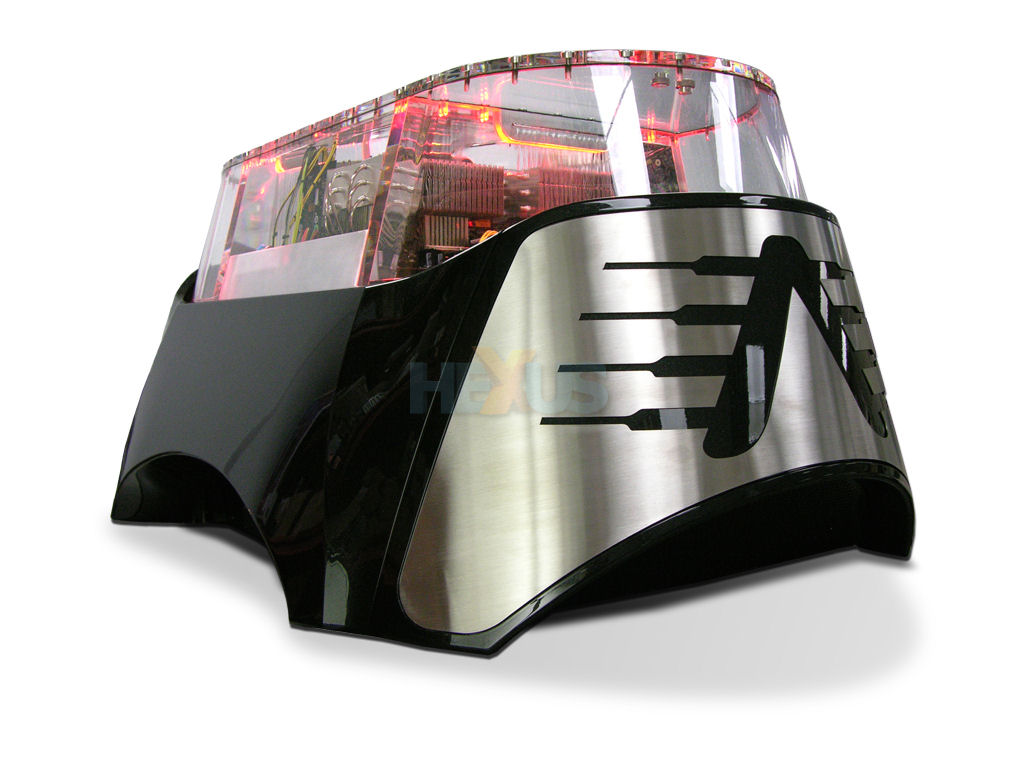
The folks over at Armari reckon that a truly über-PC should be stunningly, jaw-droppingly special, in the same way as an outlandish concept car from, say, Audi is special. It needs to be so far removed from the present PC paradigm that it's virtually unrecognisable, in both performance and looks, but it needs to be all that and still function as a workhorse.
How does one go about architecting the ultimate PC, which takes liberally from the esoteric cooling world but is reliable at the same time? What should it look like. What should it be able to do? Let's take a brief preview look at Armari's refulgent vision of a super-computer in a box.