


Introduction
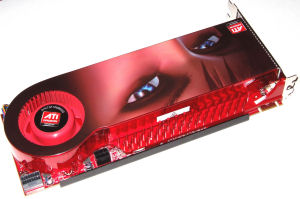
Sitting through presentation after presentation during AMD's technical briefings held last April, two things were painfully apparent when suit after suit evangalised about the brilliant and forward-looking architecture of the R600 GPU (Radeon 2900 XT).
Firstly, there was no mention of it being a world-beater and, as such, the fastest GPU in the world. Rather, the lack of such an announcement condemned ATI - the graphics arm of AMD - to play second-fiddle in the pure performance stakes at the upper echelons of the discrete graphics-card market. NVIDIA's GeForce 8800 GTX and Ultra SKUs offered more from a gamer's point of view, frankly.
Reinforcing the fact that performance leadership was lost and not about to be regained by a single-GPU architecture in the foreseeable future, ATI priced the R600 aggressively, thereby offering decent value for money - if £270, the launch price, could be considered decent for a single component.
Introduced just over two months ago and improving on the R600 design by endowing it with a larger feature-set, ATI's range-topping Radeon HD 3870 offered similar performance for just £150. It wasn't fast enough to give the now-venerable NVIDIA G80 SKUs a run for their money, but battled well in the volume space where it competed against a couple of NVIDIA refreshes - the GeForce 8800 GT and 8800 GTS 512.
ATI would have to architect a grounds-up design to substantially increase pure performance. Such a move would be costly in terms of time to market and, well, sheer design expense.
Now, it's done what we all expected, that is, combined two Radeon HD 3870s on to a single PCB, CrossFired them, and officially launched a dual-GPU card to cater for the high-end of the market.
Let's now see if such a move pays off.